⚠️ Attention: Real estate investors entering new construction for the first time

Orientation Before Execution
Start Here Before You Spend A Dollar On New Construction
In Two Hours You'll Know More Than Investors Who Spent Months Trying To Figure This Out Alone
If you're a flipper, rental investor, or high-income earner looking to level up with new builds… This is the complete orientation program you wish existed before dropping six figures into the unknown.
If you're a flipper, rental investor, or high-income earner looking to level up with new builds…
This is the complete orientation program you wish existed before dropping six figures into the unknown.
CLICK BELOW TO WATCH FIRST!
The Cost of Not Knowing
You've probably heard the stories:
The Flipper
$87K lost by treating new construction like a rehab.
He underestimated complexity, timelines, and carrying costs... and watched his margin evaporate before the house was framed.
The Self-Funded Investor
$64K lost by overbuilding for the neighborhood.
He put high-end finishes and a custom layout into a market that couldn't support it... and couldn't exit without taking a loss.
The Rental Investor
$40K lost after closing on a lot without verification.
The rental numbers penciled. The lot didn't. By the time he discovered the setback restrictions, he was already $40K in.
This is not because they're lazy.
It's because they didn't understand the game before they played it.
Here's what they missed:
Where risk actually lives in new construction.
Not in framing or finishes... but in the decisions you make before you ever break ground.
Built on experience from builders behind 500+ completed projects
What If You Could See The Whole Map Before You Play The Game?
That's exactly what this program is.
It's not GC training.
It's not how to manage subcontractors.
It's not a course teaching you how to swing a hammer.



This is a complete orientation for real estate investors that shows you how new construction actually works before you deploy capital.
Because the best time to learn is…
before you make the $100,000 mistakes.
Built on experience from builders behind 500+ completed projects
We're Corey Fields Jr. & Sr.

We're not "internet gurus."
We're builders, investors, and developers operating an $11M+ new construction pipeline.
And we created this because we were tired of watching smart people lose big money they didn't have to.
We're not "internet gurus."
We're builders, investors, and developers operating an $11M+ new construction pipeline.
And we created this because we were tired of watching smart people lose big money they didn't have to.
25+
years of
experience
500+
completed
projects
$11M+
active development
pipeline
Built on experience from builders behind 500+ completed projects
HERE'S EVERYTHING YOU GET
When You Get Started Today!

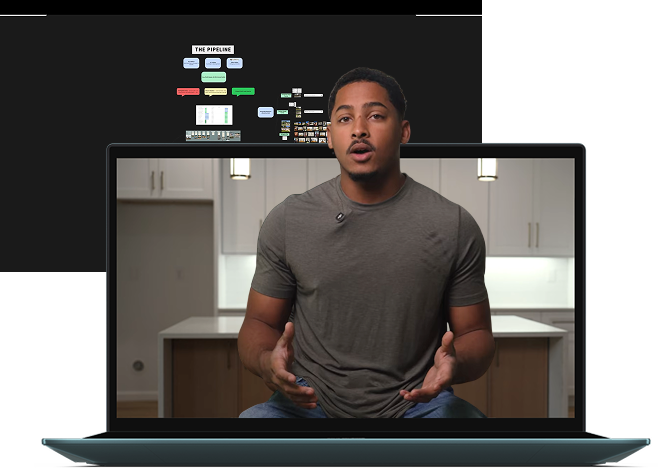
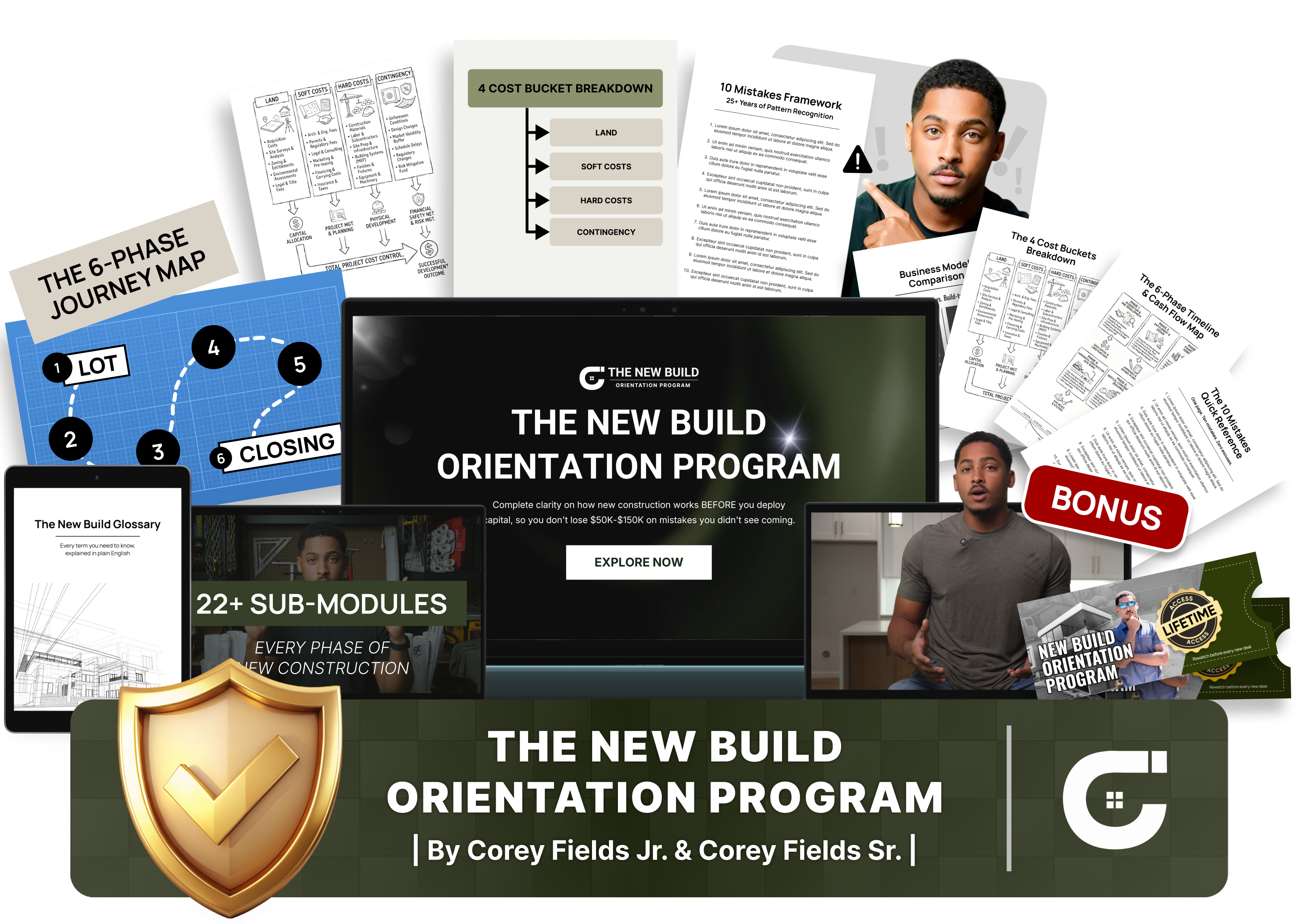
6 Complete Modules
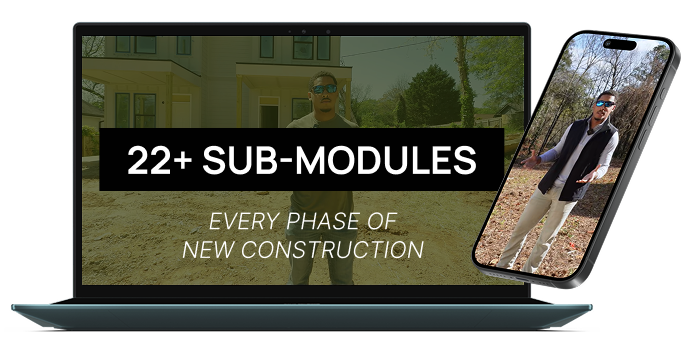
22+ Sub-Modules covering everything you need to know before deploying capital
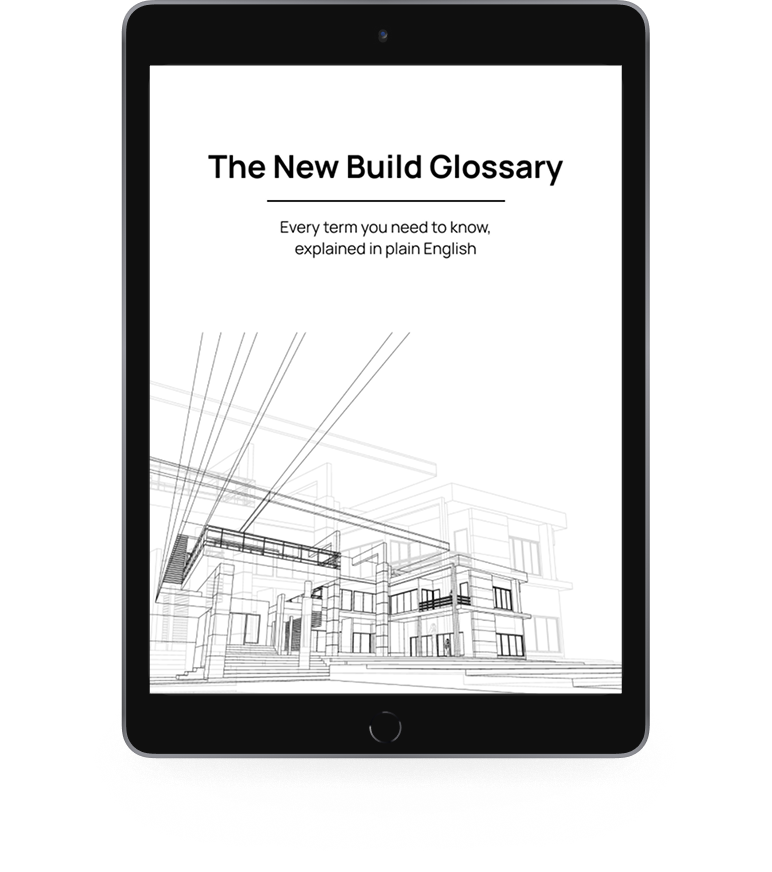
All of the essential terms organized by phase. Plain language definitions with practical context, not textbook definitions.
Stop nodding along in conversations you don't understand.
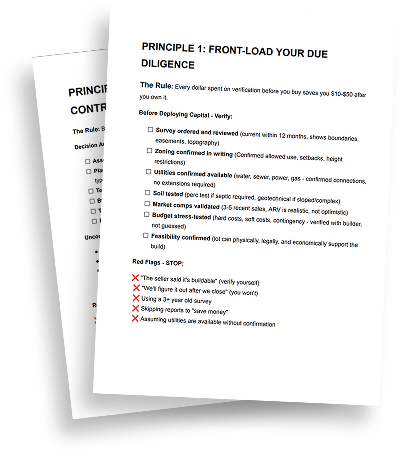
The exact checklist we run every deal through before deploying capital. Four filters. Zero room for preventable mistakes.
Most deals should fail this filter. That's not failure - that's the filter working.
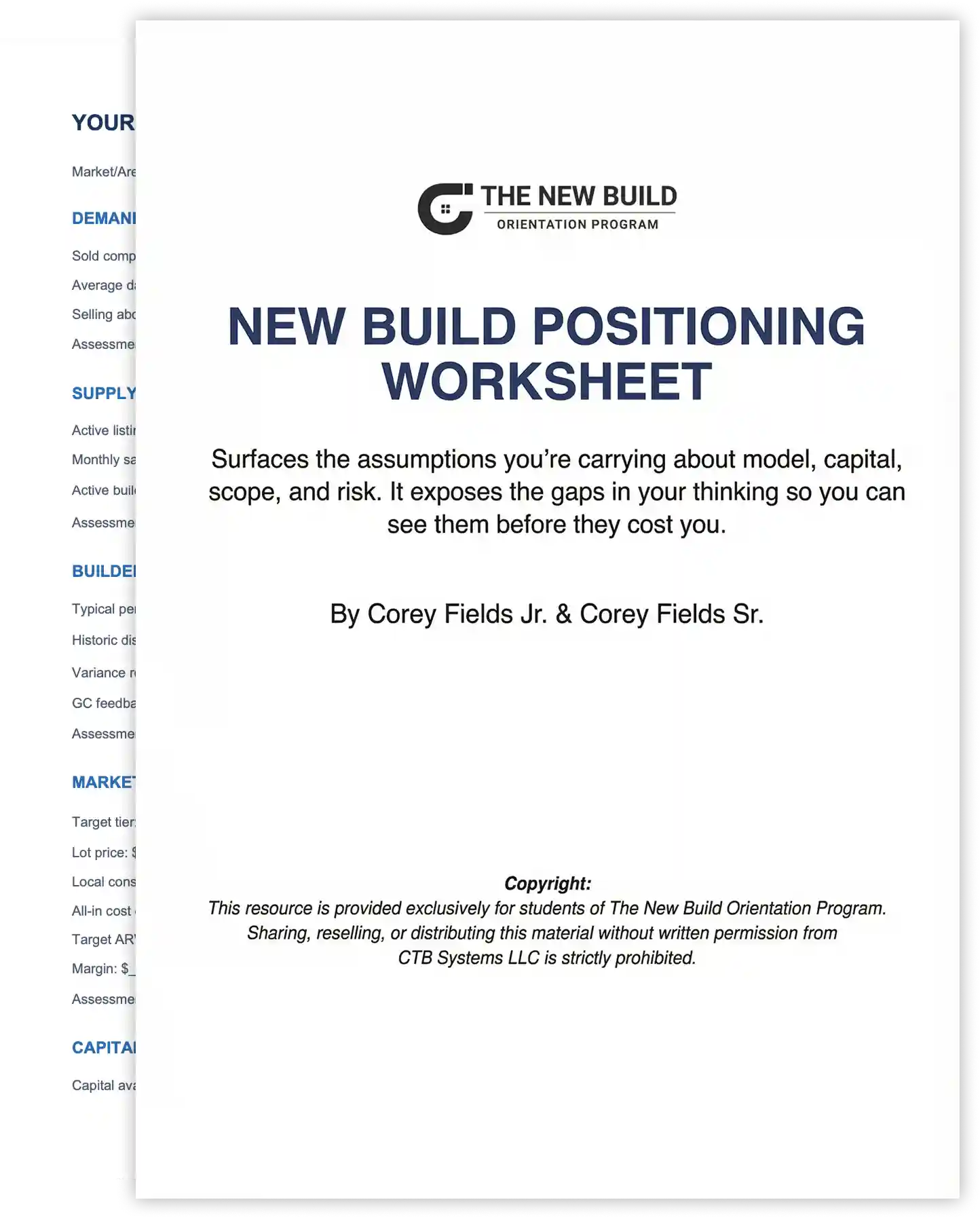
Surfaces the assumptions you're carrying about model, capital, scope, and risk. It exposes the gaps in your thinking so you can see them before they cost you.
The investors who protect their capital don't skip this step. The ones who lose it do.
Every professional you need for a new build - what they do, why they matter, when they enter.
Every professional you need for a new build - what they do, why they matter, when they enter.
You'll hit a phase where nothing seems to be happening and you'll start to panic. This shows you what normal actually looks like.
A visual timeline showing three stages, 12 months, and the actual shape of time through a real deal.
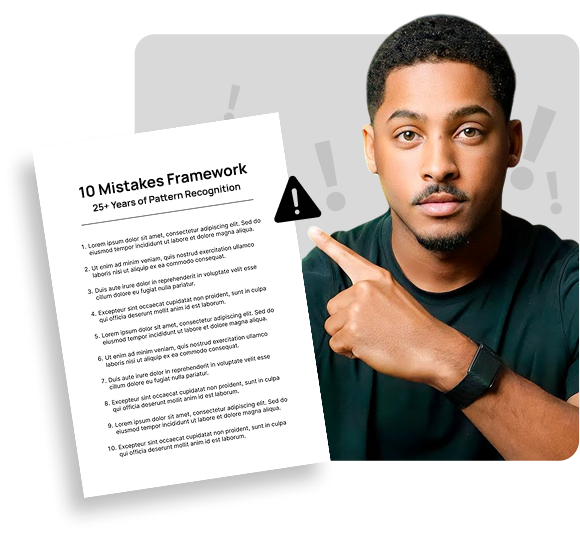
Check yourself against the failure patterns before you start. If any apply to your deal - stop.
Organized by failure type with exact cost ranges for each mistake. This prevents you from starting deals that were never going to work.
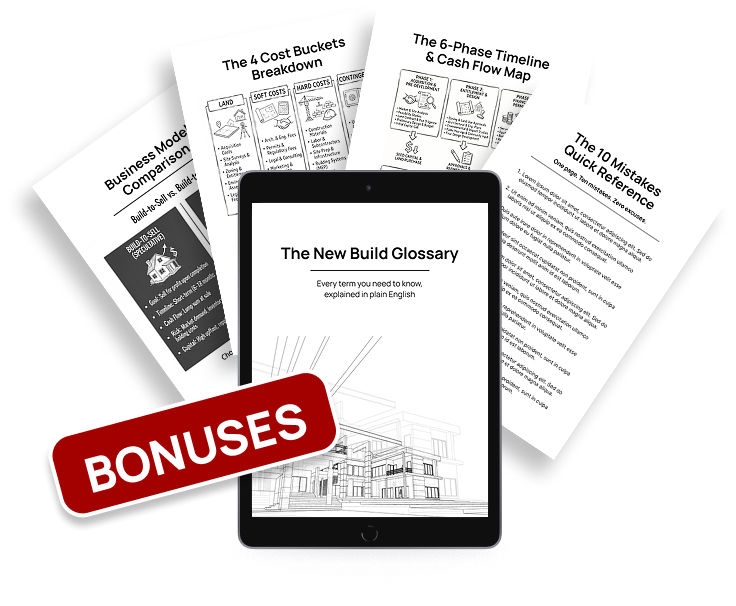
6 Done-For-You PDF Frameworks to Reference on Every Deal
The New Build Glossary
Every term you need to know, explained in plain English
The Core Principles Decision Filter
The exact checklist we run every deal through before deploying capital.
My New Build Positioning Worksheet
Land, soft costs, hard costs, contingency mapped visually
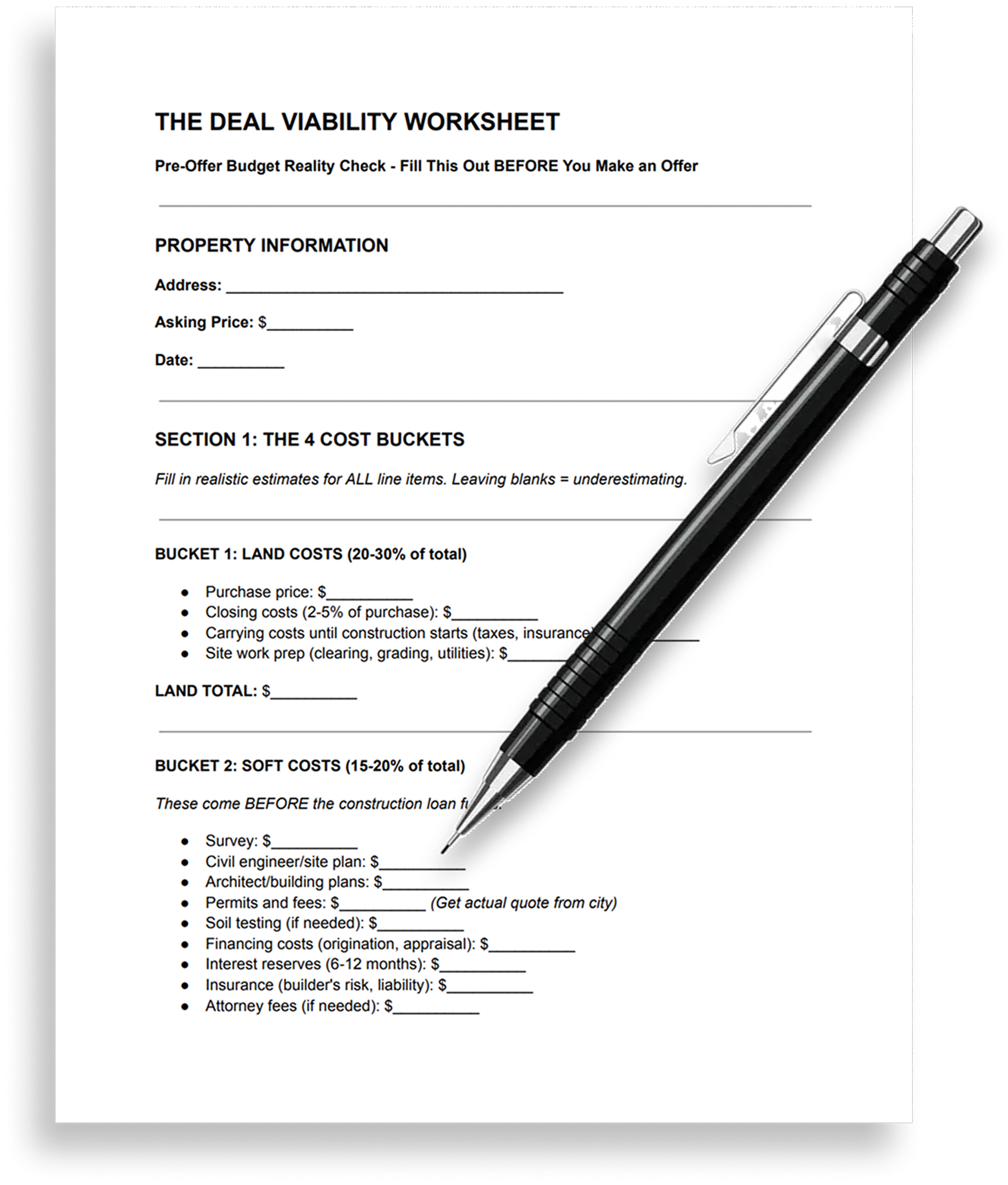
The Deal Viability Worksheet
A pre-offer reality check that forces you to account for all 4 cost buckets, verify capital sources, calculate actual margins, and make an honest go/no-go decision before you deploy a dollar.
The Core Team Reference Sheet & Timeline Overview
A visual timeline showing three stages, 12 months, and the actual shape of time through a real deal.
The First Build Failure Checklist
A pre-decision kill switch that stops you from making the 10 most expensive mistakes first-time builders make before you commit capital, sign contracts, or buy a lot.
Lifetime Access so you can rewatch before every new deal
Built on experience from builders behind 500+ completed projects
These Are The Same Exact Operating Systems We Use To Run Our $11M+ Pipeline.
And I'm giving you all of it.
HERE IS EVERYTHING YOU WILL LEARN
inside the orientation program

MODULE 1:
The Foundation
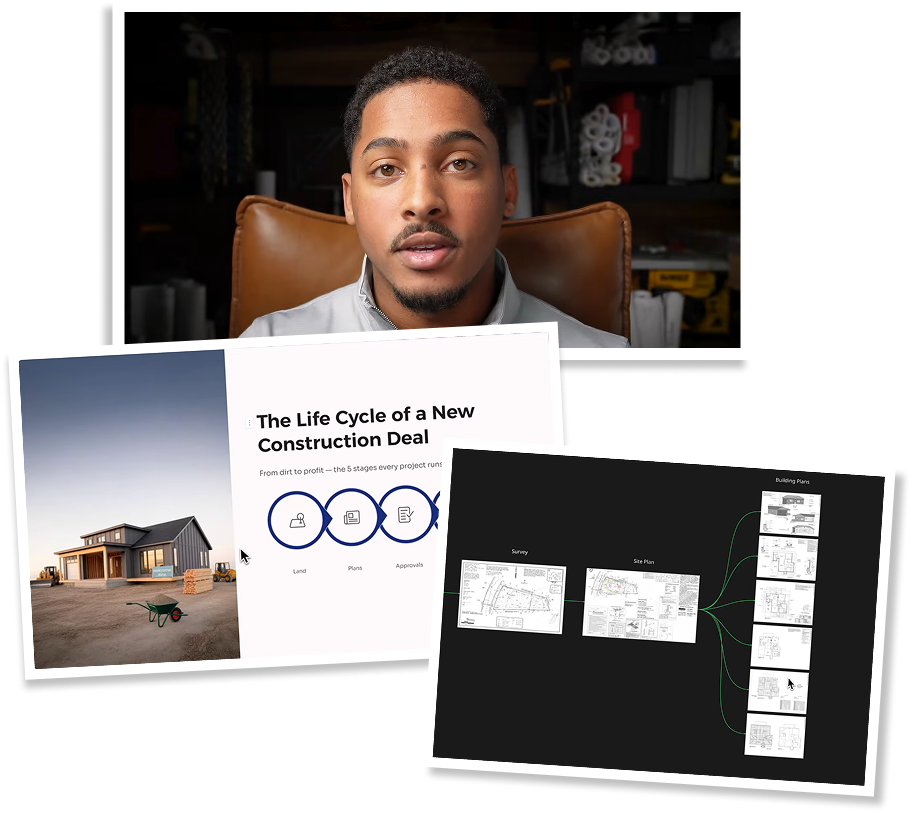
Before You Learn The Model, Learn How To Think
The Mental Model Shift — Why new construction is fundamentally different and what it demands from you
Your Role as an Investor — What you do, what you don't do, and why you're not a GC
The Language — Essential terms from risk stacking to carrying costs so you can speak the language with your team
MODULE 2:
Operating Principles
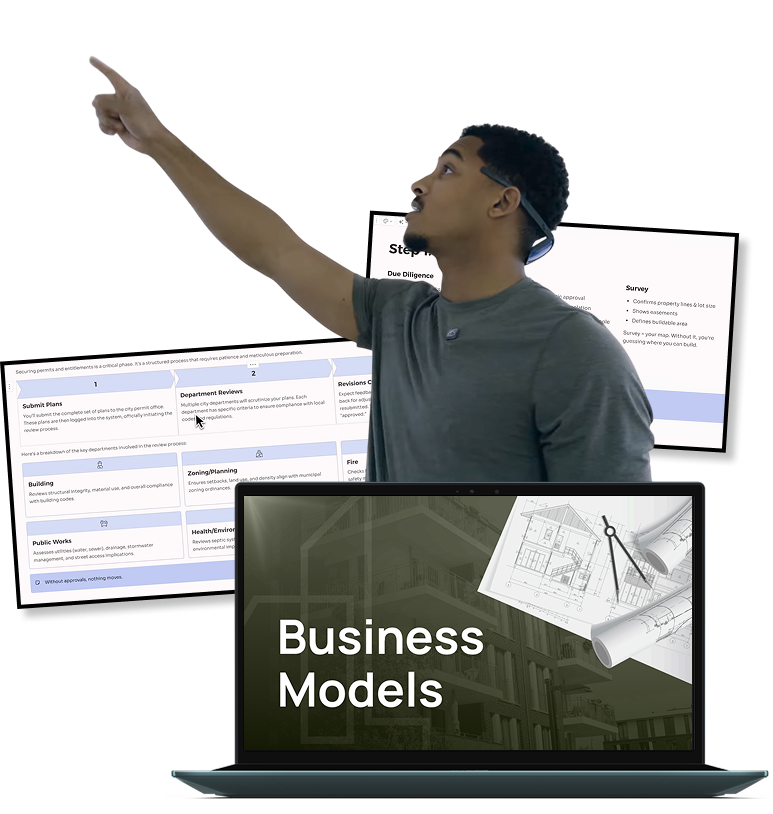
The Rules That Keep You Alive
Front-Load Your Due Diligence — Every dollar spent on verification before you buy saves $10-$50 after you own it
Control What You Can Control — Build your deal around the variables you own, not the ones you don't
Don't Advance on Assumptions — Don't move forward until the previous step has proven itself
Limit Unproven Variables — One variable maximum, not five (risk isolation vs. risk stacking)
MODULE 3:
Business Model Clarity

The Framework That Determines Every Decision After It
The Two Models Explained — Why Build-to-Sell and Build-to-Rent force completely different thinking from day one
Capital Requirements & Financing — What your money actually has to survive when timelines stretch and assumptions break
Understanding Risk — Why losses come from panic under pressure, not from risk existing
MODULE 4:
The Economics
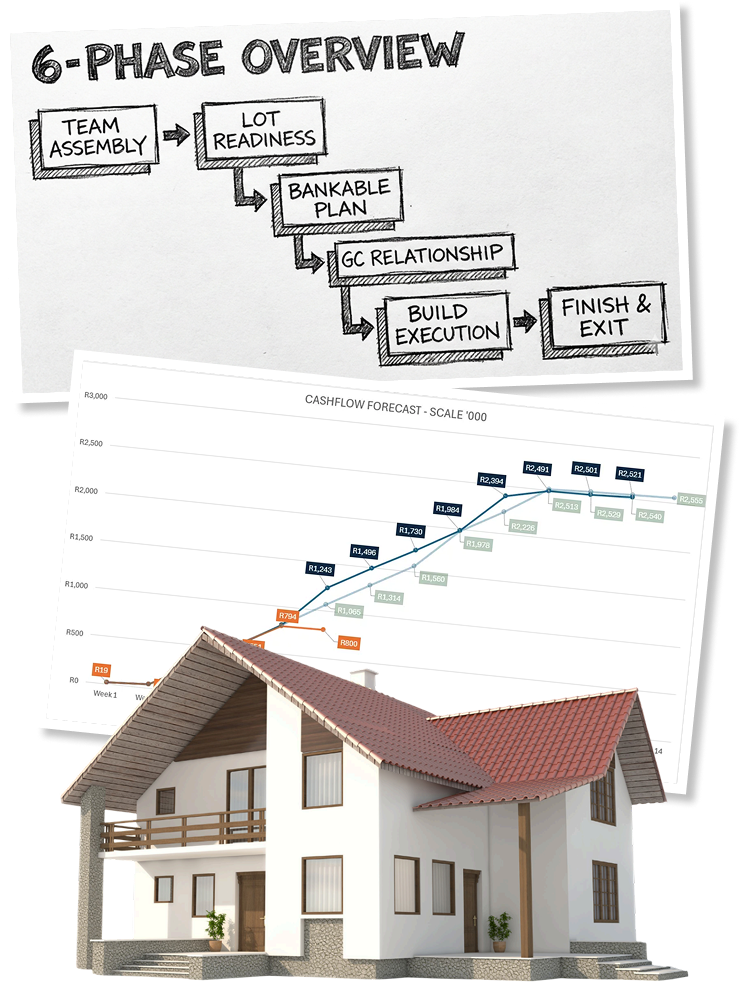
How Money Actually Moves
The 4 Cost Buckets — What they are exactly and why missing one kills deals
What Makes a Deal Work For YOU — Your margin criteria, not someone else's numbers
The Hidden Budget Killers — Where budgets actually blow up (and how to prevent it)
MODULE 5:
The Journey
What Actually Happens (And When)
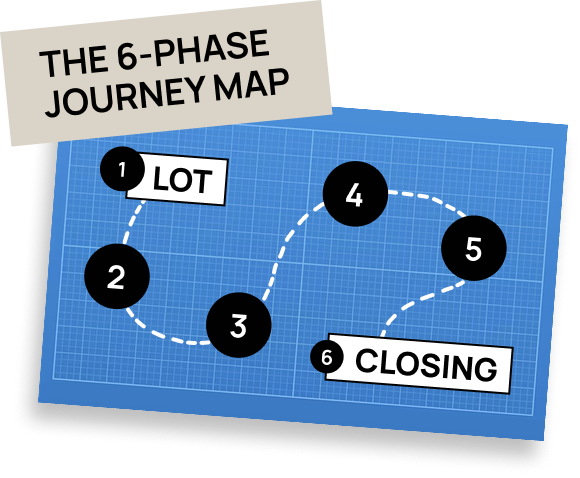
The 6-Phase Overview — From lot acquisition to getting paid
The Real Timeline — Month-by-month, phase by phase timeline so you know what to expect
The 3 Hard Parts — Where people quit and how to survive them
MODULE 6:
Failure Patterns
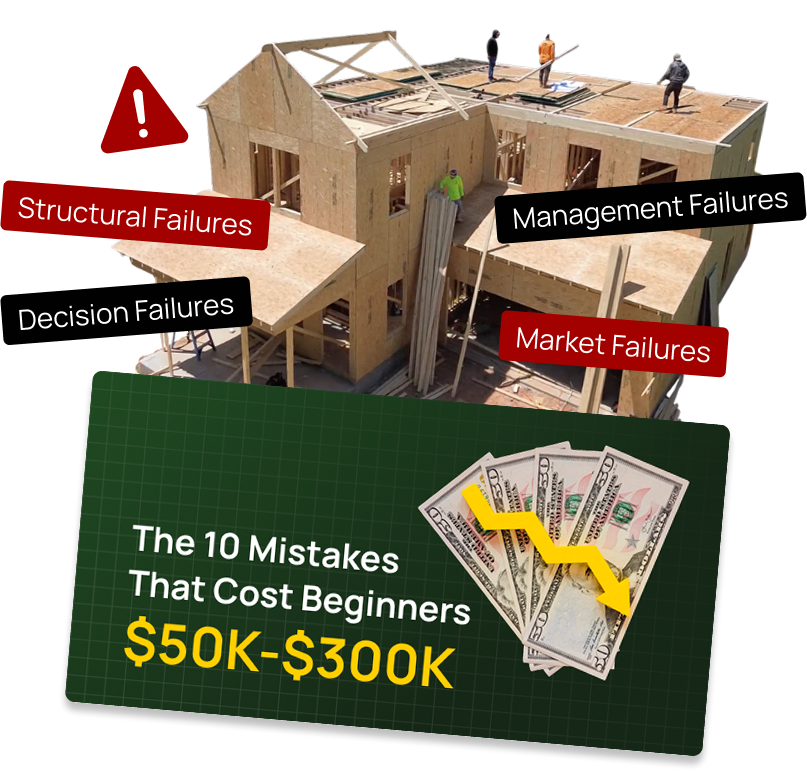
What NOT to Do on Your First Build
Why Smart People Still Lose Money — The pattern behind every expensive mistake
The 10 Mistakes Beginners Make — What they cost, why they happen, and how to avoid them
Structural Failures vs. Management Failures vs. Decision Failures vs. Market Failures — The four categories where deals die
What This Saves You From Losing:
$50,000 - $100,000+
(That's what first-time builders lose on mistakes this program prevents)
Built on experience from builders behind 500+ completed projects
Up until this point, the only way to understand this was the hard way...
Trial And Error And Possibly Losing $50K-$150K On Your First Deal.
BUT... I'm giving you 25+ years of pattern recognition for a fraction of what one avoided mistake would save you.
Built on experience from builders behind 500+ completed projects
I'm going to let you have access to the entire orientation, easily worth $50,000+ in mistakes avoided, for just...
ONE payment of
ONLY $997!

Holy CRAP, Right??!!

It's Practically 98% Off...
Imagine getting access to an entire builder's brain where:
25+ years of new construction experience is downloaded into your head...
500+ completed projects worth of pattern recognition becomes yours...
Every costly mistake is exposed BEFORE you make them...
And then after all of that knowledge is transferred to you...
You walk into your first new construction deal with complete clarity…
knowing exactly what happens, when it happens, and what YOUR role is at every phase
You walk into your first new construction deal with complete clarity…
knowing exactly what happens, when it happens, and what YOUR role is at every phase
Note: This is a single one-time payment. There are no other hidden fees or charges.
You Might Be Thinking:
"Why Do I Need This? Can't I Just Figure This Out Myself?"
Look, I get it. You're resourceful. You've probably already tried:
"Why Do I Need This? Can't I Just Figure This Out Myself?"
Look, I get it. You're resourceful. You've probably already tried:
YouTube rabbit holes
Hundreds of videos, but no cohesive framework. Every video covers something different. You have scattered knowledge, not complete understanding.
Bigger Pockets forums
Conflicting advice from people at different experience levels. Hard to know who to trust. Information is market-specific and often outdated.
Talking to other investors
Most investors haven't done new construction. Those who have give surface-level advice like "just find a good GC" without explaining the full process.
Trying to piece it together yourself
Reading zoning codes, looking at lots on Zillow, trying to build budgets from random sources. Leads to analysis paralysis.
"New construction" courses
Most are really GC training. They teach you how to swing a hammer, manage subs, or become a builder, not investor-level decision making.
Here's what's missing from all of these:
The complete picture, the order of operations, the perspective that only comes from operators who've completed 500+ projects and are currently running an $11M pipeline...
...Not from retired builders or educators who've never deployed their own capital.
The complete picture.
The order of operations.
And the perspective that only comes from operators who've completed 500+ projects and are currently running an $11M pipeline...
...not from retired builders or educators who've never deployed their own capital.
That's where the New Build Orientation comes in.
You will get the complete orientation before you deploy capital, from operators who are actively building.
Built on experience from builders behind 500+ completed projects
Why Would You Give Me
25+ Years Of Knowledge,
500+ Projects Worth Of Experience, And The Exact Framework You Use On Your $11M Pipeline For Just $997?
What's the catch...?
I get it. The offer is insane. In full transparency, I want to make this a no-brainer for you.
Here's the reality:
We get calls all the time from investors who want to work with us on new construction deals.
And most of the time, we have to say no... not because we don't want to help, but because they don't know enough to even have a real conversation yet.
And we're too busy to stop what we're doing to educate someone from zero while trying to build houses.
That's the problem this solves.
If you complete this orientation, you're not showing up to conversations unprepared.
You’ll understand how the models work.
You’ll know where money goes.
You’ll speak the language.
You’ll ask the right questions.
You're taken seriously... not dismissed as someone who doesn't know what they're doing.
And when you show up like that you’ll be treated like a professional. If we can help raise the baseline competence of new construction investors, fewer people get burned and the entire industry benefits.
Who doesn’t like working with someone that actually knows what they’re doing.
I get it. The offer is insane. In full transparency, I want to make this a no-brainer for you.
Here's the reality:
We get calls all the time from investors who want to work with us on new construction deals.
and most of the time, we have to say no... not because we don't want to help, but because they don't know enough to even have a real conversation yet.
And we're too busy to stop what we're doing to educate someone from zero while trying to build houses.
That's the problem this solves.
If you complete this orientation, you're not showing up to conversations unprepared.
You’ll understand how the models work.
You’ll know where money goes.
You’ll speak the language.
You're taken seriously, not dismissed as someone who doesn't know what they're doing.
And when you show up like that you’ll be treated like a professional.
If we can help raise the baseline competence of new construction investors, fewer people get burned and the entire industry benefits.
Who doesn’t like working with someone that actually knows what they’re doing.
GET STARTED TODAY FOR JUST...
$25,000
$997
Less than 1% of what you'll lose executing without understanding the game ($50K-$100K+)
Built on experience from builders behind 500+ completed projects

30-Day Clarity Guarantee
If you don't feel crystal-clear about how new construction works and whether it's right for you, email us within 30 days and we'll refund your money. Simple.
Frequently Asked Questions
Is this for people who want to become GCs?
No. This is for real estate investors who want to add new construction to their strategy. We don't teach you to do material take-offs or manage subs. We teach you to understand the business model so you can deploy capital confidently.
Does this include templates and contracts?
This program includes PDF frameworks and references to reinforce what you learn. This is orientation — understanding WHAT and WHY before you deploy capital.
How long do I have access?
Lifetime access. Watch it once before your first deal. Rewatch it before your second.
Is this market-specific?
The business model, economics, phases, and mistakes are universal. Specific numbers vary by market, but the core principles are applicable everywhere.
I'm not ready to build yet. Should I wait?
That's the point. Learn now while the stakes are low. It's a lot cheaper to spend $997 on orientation than to learn these lessons with $200K in the ground.
What if I already know some of this?
If you're 100% confident, skip it. But if there's any piece you're not crystal clear on, this is the cheapest place to find out, not on a $300K project.
IT'S DECISION TIME
You're about to deploy $200K-$500K in capital on a 12-18 month project. You can either:
OPTION A
Figure it out as you go and pay $50K-$100K+ in "tuition" when you make the mistakes every beginner makes.
OPTION B
Invest $997 and 2 hours to understand exactly how the game works before you deploy a single dollar.
The choice is yours.
Built on experience from builders behind 500+ completed projects

© 2026 CTB Systems LLC